Niji 8 AI Image Generator: Create One Character and Reuse It Across Unlimited Scenes
See how Niji 8 keeps an illustrated character consistent across scenes, with a practical prompt, India access and free trial limits.
Ali Mehdi Hemani, Lead Trainer 12 min read
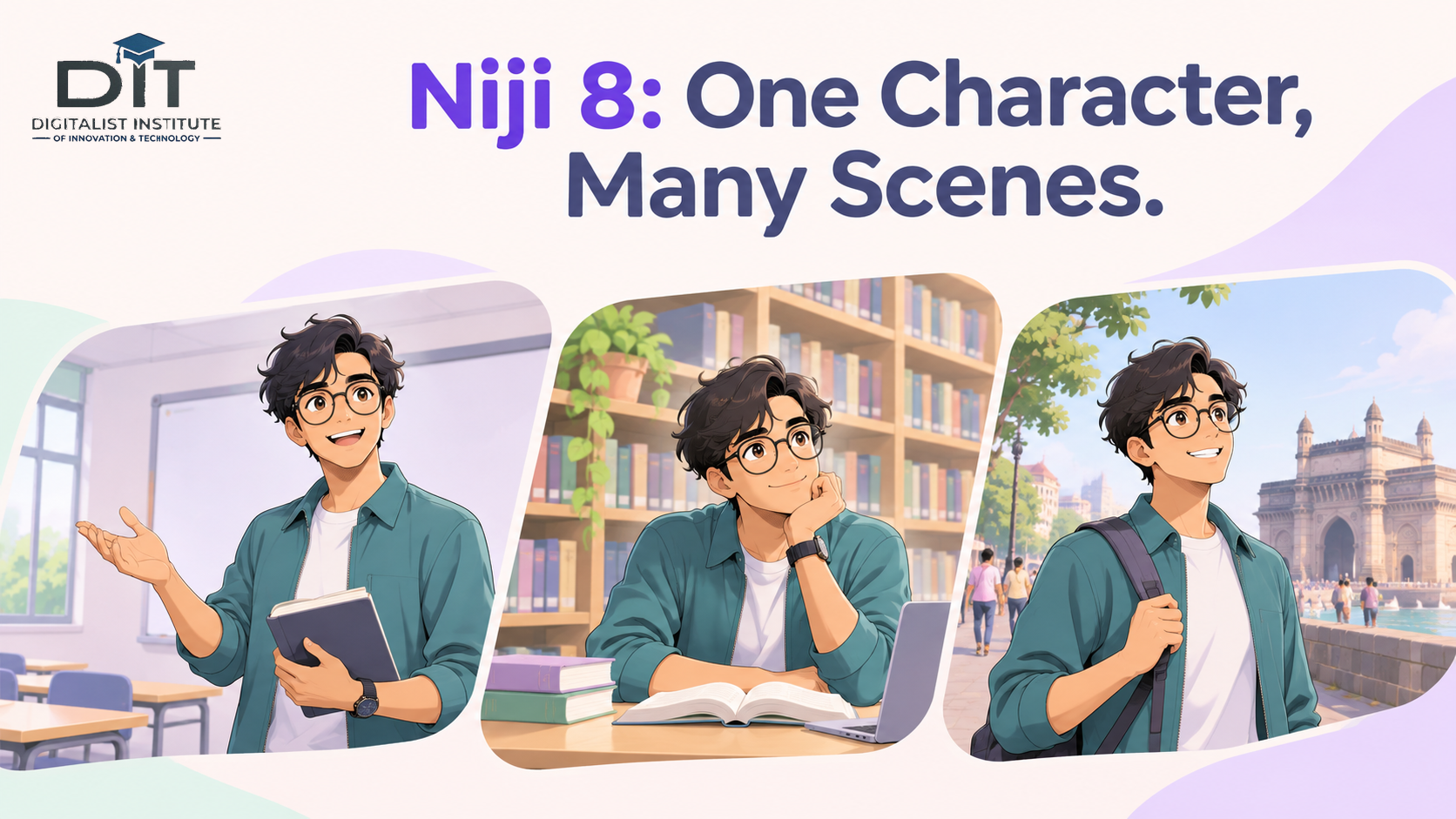
Imagine creating one illustrated character and using that same character in 20 different Instagram posts, educational videos, comics and marketing campaigns.
Until recently, maintaining the same character across AI-generated images could be frustrating. You might describe the same character repeatedly, but the face, hairstyle, clothing or proportions could change.
The Niji 8 AI image generator introduces an interesting approach to this problem. Announced on 24 November 2026 by Niji Journey, developed in collaboration with Spellbrush and Midjourney, the new model introduces an editing workflow designed to preserve character identity using reference images.
For Indian creators, educators, freelancers and small-business owners, this could become a useful addition to their creative toolkit.
Key takeaways
- Niji 8 was announced on 24 November 2026.
- Its new editing workflow uses character references and background images.
- You can create illustrations and simple multi-panel comic compositions.
- No coding or traditional illustration skills are required.
- Niji Journey advertises 20 free generations for new mobile-app users.
- The full Niji 8 editing workflow on the website and Discord is not covered by the free trial.
- Character consistency still needs independent testing.
What is the Niji 8 AI image generator?
Niji 8 is the latest generation of Niji Journey, an anime-focused AI image-generation system developed through a collaboration between Spellbrush and Midjourney.
Unlike a general-purpose image generator, Niji Journey specialises in anime-style illustrations, character designs, expressive artwork and visually stylised scenes. In other words, it is an AI anime generator built for illustrated characters rather than photorealistic images.
The new version was officially announced on 24 November 2026.
You can access Midjourney Niji 8 in two ways:
Option 1: Through the website
- Open the Midjourney website.
- Go to the image-generation interface.
- Open the Version dropdown.
- Select Niji 8.
- Enter your image-generation prompt.
Option 2: Through Discord
Add --niji 8 at the end of your image-generation prompt.
The announcement also highlights improved prompt following, greater variety and a new editing workflow for maintaining character consistency.
The important distinction is that Niji 8 is not simply about making prettier anime images. Its new AI image editing capability is designed to make recurring illustrated characters more practical for creative projects.
The Niji 8 character consistency breakthrough
This is the most interesting part of the announcement.
Imagine that you run an educational Instagram page.
You want one illustrated teacher to appear in every post. In one image, the teacher explains mathematics. In another, the teacher discusses artificial intelligence. In the third, the teacher introduces a new course.
You want the same character throughout.
Previously, repeating a detailed text description could still produce noticeable differences.
Niji 8 introduces a different workflow.
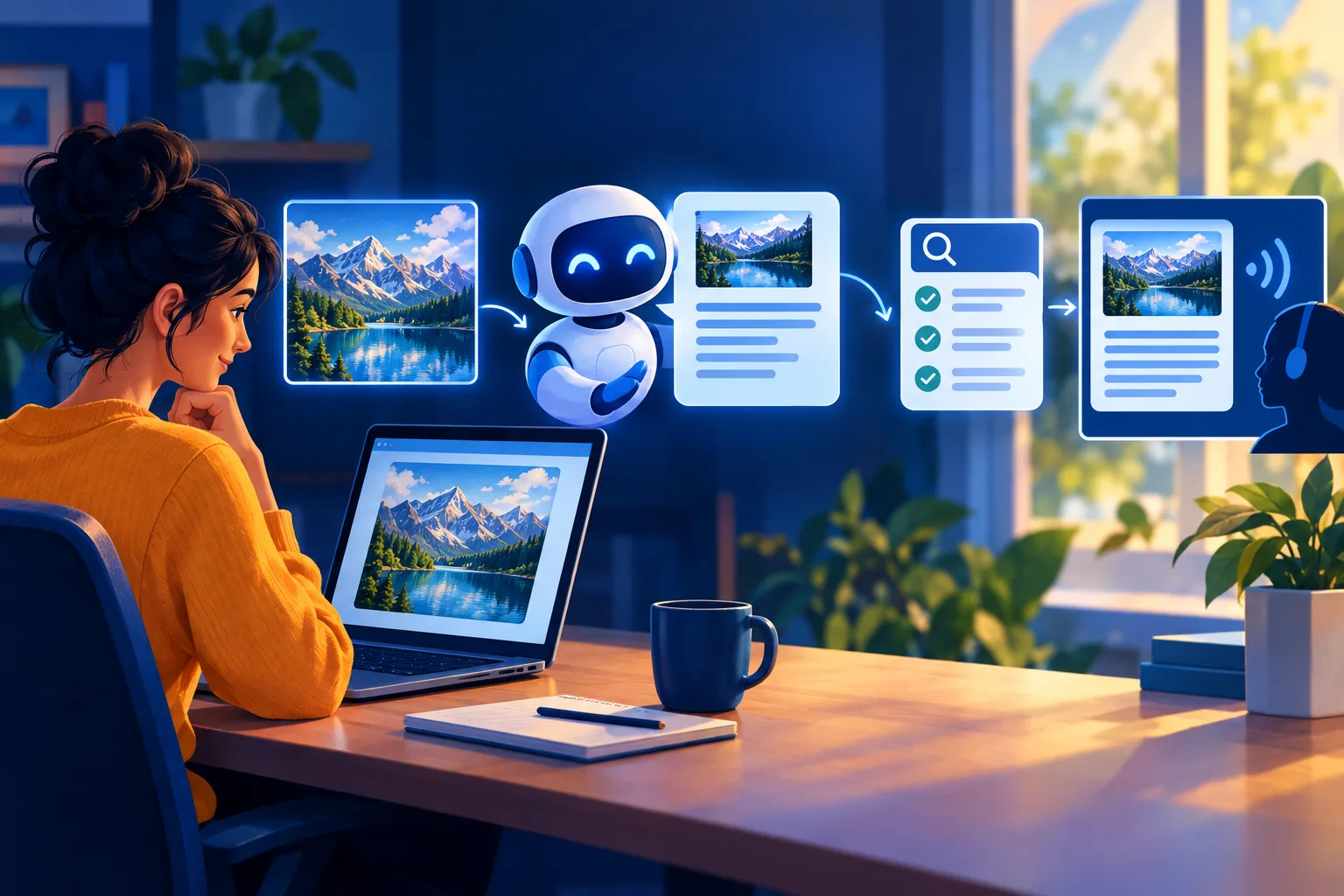
Use an AI character reference and a background
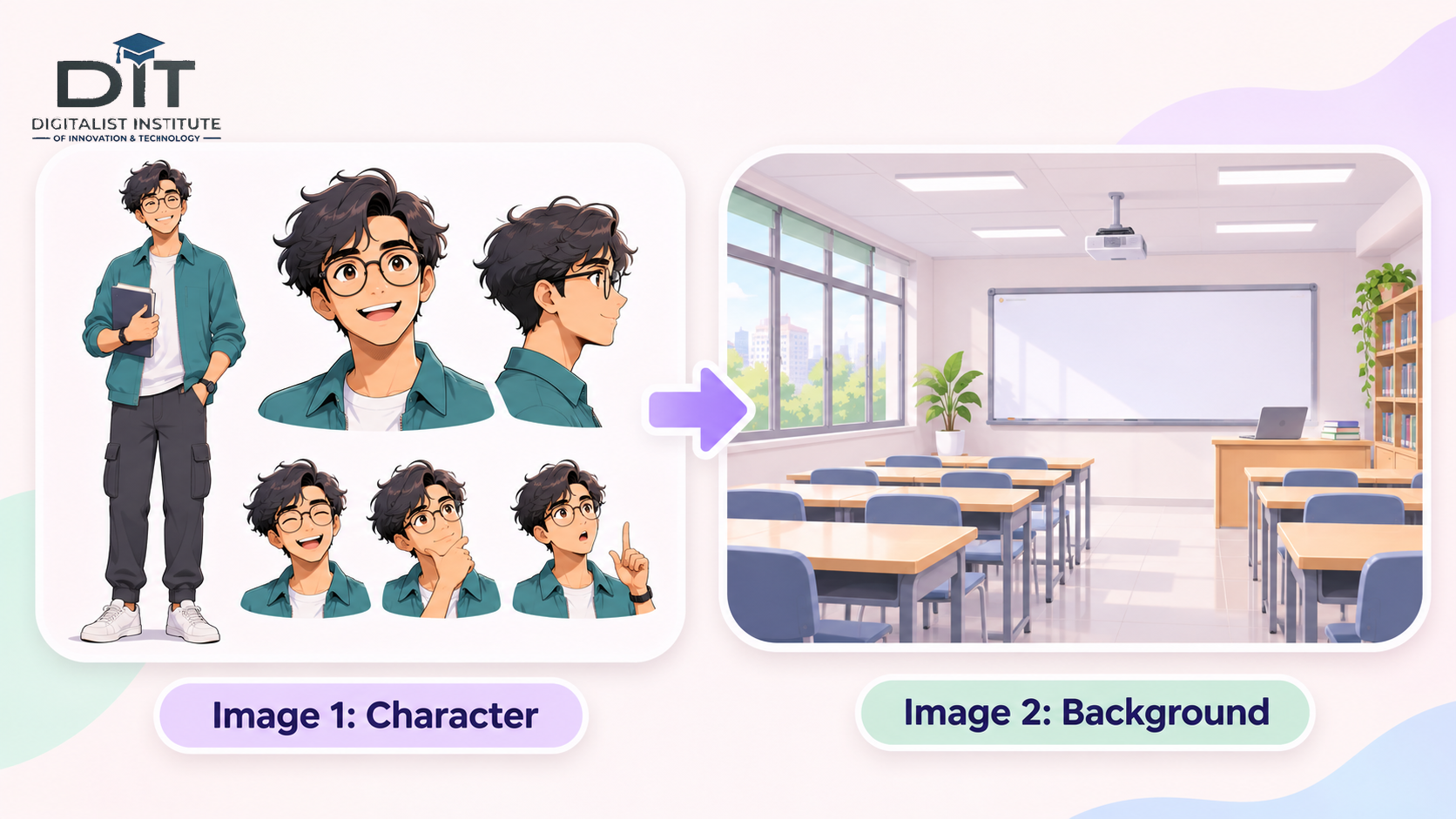
Instead of relying entirely on a written description, you can provide two visual references:
- Image 1: Your original character.
- Image 2: The background or environment where you want that character to appear.
You then describe how the character should be placed into the second image.
The model's editing workflow attempts to preserve the character while adapting the pose and surroundings.
How Quick Edit works
According to the official announcement, after generating an image, you can open the Quick Edit option near the bottom-right corner.
This opens an editing interface where additional reference images can be attached.
The developers specifically recommend using two images when you want more control over character consistency.
For example:
- First image: Your original character.
- Second image: A classroom.
- Editing instruction: Place the character inside the classroom while retaining their original appearance.
You can repeat this process with different environments.
Why repeating the same prompt is no longer enough
There is one detail creators should understand.
Niji 8 deliberately moves away from relying on identical written prompts to reproduce the same character.
The developers explain that the same short prompt can now produce a wider variety of characters.
That means creators should preserve their original reference images instead of depending entirely on text descriptions.
Think of your character reference as a reusable creative asset.
Five practical uses for Niji 8 in India
The most interesting applications are not necessarily limited to anime artists.
Let's look at how different people could use this capability.
1. Educational mascots
Imagine an educational institute creating its own illustrated teacher mascot.
That mascot could appear in:
- Mathematics revision posts.
- Science explanations.
- Student announcements.
- Course advertisements.
- Educational storytelling.
- Instagram carousel posts.
Rather than designing a new illustration for every topic, the institute could maintain a character reference and reuse it.
For educational brands, this creates an opportunity to develop a recognisable visual identity.
2. Instagram carousel storytelling
Creators frequently need a continuous visual identity.
Consider someone producing a weekly educational comic series.
Each episode could feature the same illustrated character in a different situation.
For example:
- Episode 1: The character discovers artificial intelligence.
- Episode 2: The character builds an application.
- Episode 3: The character creates an AI agent.
- Episode 4: The character starts a business.
A consistent character could make the series easier for audiences to recognise.
3. Storyboards for longer videos
It could also help creators develop storyboards before producing longer videos.
4. Small-business marketing
Small businesses often cannot afford to commission a new illustration for every marketing campaign.
An original illustrated mascot could become part of their visual identity.
A restaurant could create an illustrated chef.
A coaching centre could create an illustrated teacher.
A children's clothing brand could create a friendly illustrated character.
These characters could then appear across promotional artwork, educational content and social-media campaigns.
However, businesses should check their intended commercial usage against the applicable Midjourney terms before publishing.
5. Freelance character libraries
Freelancers could offer recurring-character design as an additional creative service.
Instead of delivering isolated AI images, they could develop a small character library for a client.
That library could support monthly social-media campaigns, promotional illustrations and story-based content.
This is an opportunity worth exploring, not a guarantee that every client will pay for it.
How to create a recurring character with the Niji 8 AI image generator
Let's design a practical experiment.
We will create an original illustrated science educator and attempt to place that character into multiple environments.
This is a proposed demonstration. It is not a claim that the prompts have already been tested.
Step 1: Generate an original character
Open Niji 8 and enter this prompt:
Create an original anime-style character sheet for a friendly Indian science educator. Young adult educator, short dark hair, round glasses, teal jacket over a white T-shirt, warm confident expression, holding a small notebook. Show a full-body front view, clear facial features, consistent clothing and colours, clean white background, professional character design sheet. No logos, no text, no additional characters.
Generate the image and select the character you want to use.
Save this original image. It will be your primary visual reference.
Step 2: Prepare a background
Now generate a separate classroom background.
Use this prompt:
A modern Indian classroom, large whiteboard, clean desks, soft natural daylight, minimal interior design, professional educational environment. Anime illustration style, wide composition, no people, no characters, no text.
You now have two separate images:
- Your original character.
- Your classroom background.
Step 3: Combine them with Quick Edit
Open your generated character image.
Find the Quick Edit option and attach the two images as references.
The character image should be image 1, and the classroom background should be image 2.
Use the following prompt:
Take the character from image 1 and place them into image 2. Preserve the same face, hairstyle, glasses, outfit, colours and body proportions. Adapt the character's pose naturally to the new environment. Match the lighting and perspective of image 2. Do not redesign the character or introduce additional characters.
The objective is to preserve the character while adapting the scene.
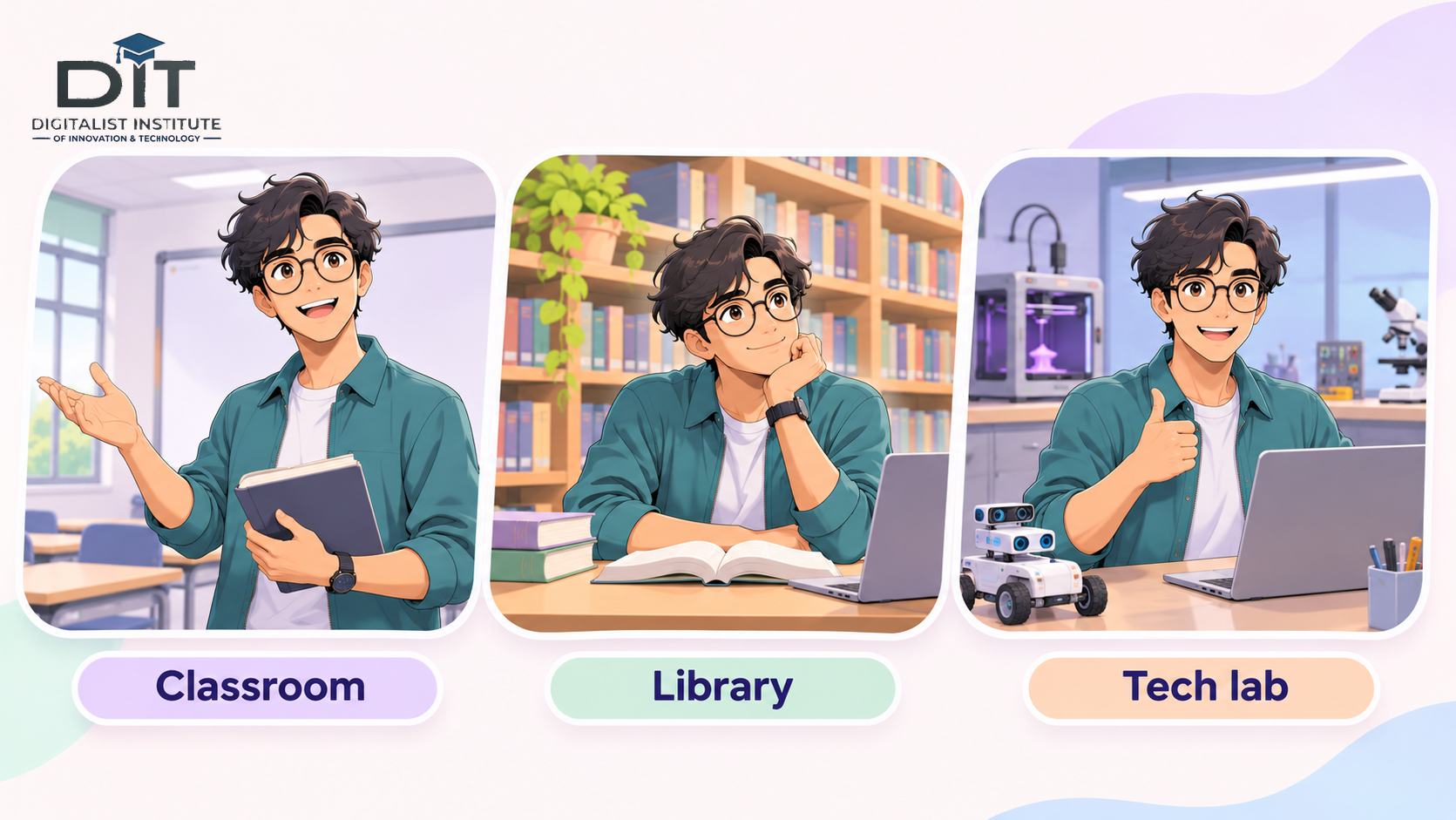
Step 4: Compare consistency across scenes
Now create three additional backgrounds:
- A modern library.
- A technology laboratory.
- An outdoor Mumbai street.
Use the same original character reference for each edit.
This gives you an opportunity to compare how well the character's identity is maintained across different environments.
Do not judge the results only by how attractive the images look.
Compare the following:
- Same face, hairstyle and glasses.
- Same outfit and colours.
- Natural fit with the background.
- Same visual style.
If these elements remain consistent, the workflow may be useful for your project.
Remember that the purpose of this experiment is to evaluate the feature, not to assume perfect results.
Niji Journey free trial, pricing and availability in India
This is particularly important for Indian users who want to explore new AI tools without immediately purchasing subscriptions.
There are a few things to understand.
Is Niji Journey available in India?
Yes. Niji Journey has listings in the Indian Apple App Store and Google Play.
You can find the official applications here:
- Apple App Store: https://apps.apple.com/in/app/niji-journey-ai-anime-art/id6446376937
- Google Play: https://play.google.com/store/apps/details?id=com.spellbrush.nijijourney
Is there a Niji Journey free trial?
Yes, but there are limitations.
The official Niji Journey mobile app advertises 20 free image generations for new users.
The trial conditions are:
- It is for new users.
- You must download the application through the official Apple App Store or Google Play Store.
- Emulator users cannot access the trial.
- Continued image generation requires a subscription.
Does the free trial cover the website and Discord?
Do not assume so.
Midjourney's official free-trial documentation specifically states that there is no free trial on Discord or the midjourney.com website.
The Niji 8 announcement confirms the new version through the website and Discord.
The availability of the 20 mobile-app generations should not be confused with unrestricted access to every new Niji 8 editing feature.
For the complete website or Discord workflow, plan for a paid subscription and check the current price before purchasing.
You can read the official conditions here: https://docs.midjourney.com/hc/en-us/articles/27870399340173-Free-Trials
Limitations and what creators should check
It is important not to confuse a promising announcement with a fully validated production workflow.
There are several things worth checking.
Character drift
The new editing approach is designed to maintain identity, but the launch announcement does not establish that every generated image will reproduce the character perfectly.
Facial details, accessories and proportions should be checked manually.
Reference-image quality
The developers specifically highlight the importance of using clear reference images.
A blurry or poorly composed character reference may make it harder to preserve the intended appearance.
Use clean, high-quality character sheets.
Editing costs and undocumented limits
Independent analysis published on 25 November 2026 notes that the specific editing limits and associated costs are not yet fully documented.
This is important for freelancers and businesses planning large-scale campaigns.
Do not assume that generating dozens of edited scenes will cost the same as generating ordinary images.
Copyright and commercial-use considerations
Use original characters rather than copying recognisable characters from existing movies, anime or games.
Also review the terms of service before using generated images commercially.
Midjourney's commercial-use provisions include additional requirements for companies earning more than US$1 million annually, including the Pro or Mega subscription requirement.
My recommendation
My recommendation is to approach it as a creative experiment.
If you are an anime artist, content creator, educator or digital marketer, the new editing workflow is worth exploring.
But do not immediately move your entire creative production process to it.
Start with one original character.
Create three different backgrounds.
Compare the face, clothing, hairstyle and overall identity.
If the results are consistent enough for your requirements, explore how the workflow could fit into your content-production process.
Also remember that Niji 8 is anime-focused. If your brand requires photorealistic product photography or a corporate visual style, this may not be the right primary tool.
Conclusion: reusable visual characters matter more than one beautiful image
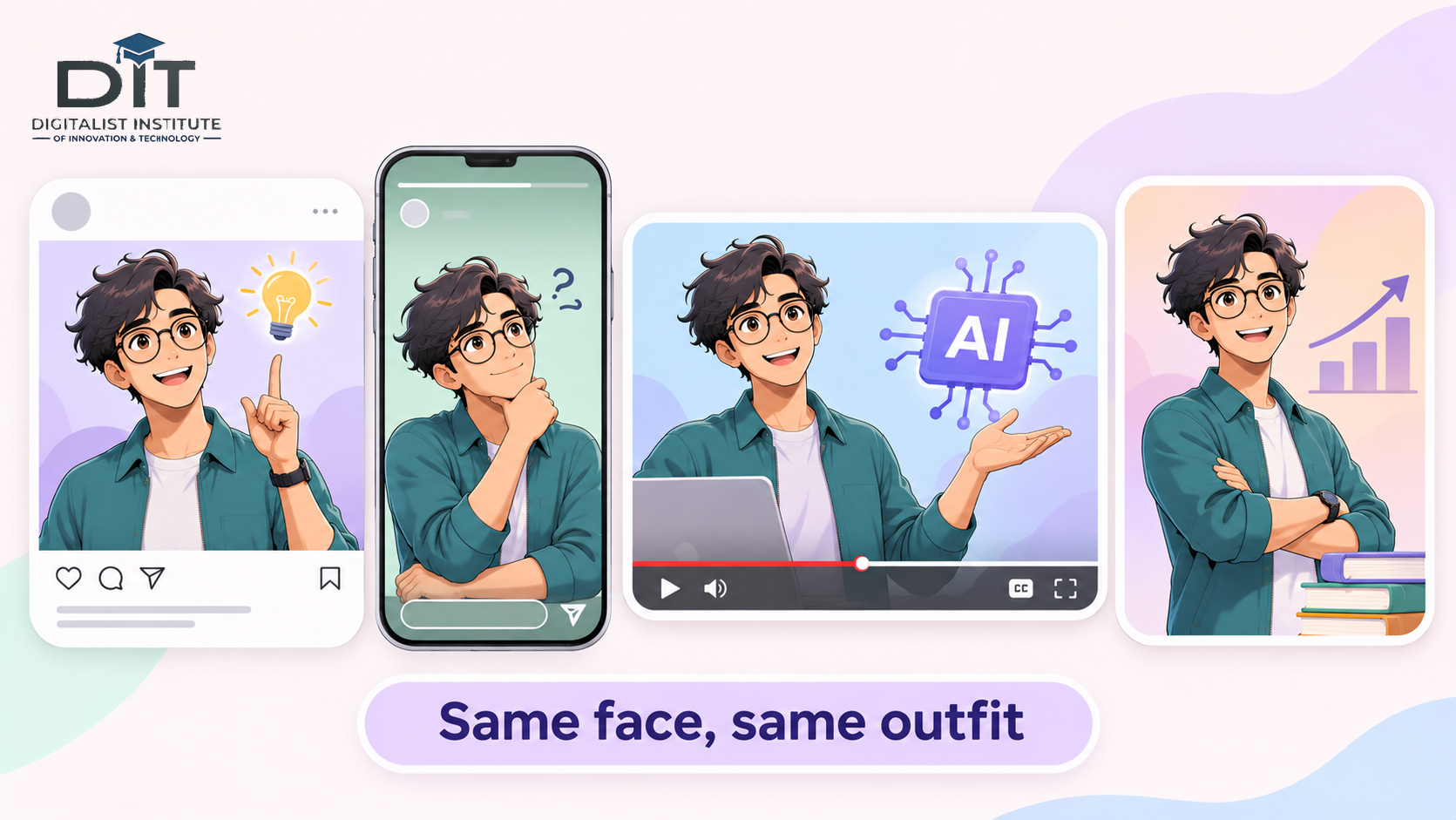
The biggest opportunity behind the Niji 8 AI image generator is not simply producing another beautiful illustration.
It is the possibility of creating reusable visual characters.
For Indian educators, content creators, freelancers and small-business owners, this opens up interesting ways to build recurring characters, educational storytelling and visual campaigns without traditional illustration skills.
The new reference-based editing workflow is promising, although its consistency and cost need further independent testing.
My suggestion is simple: create one original character, experiment with three backgrounds and evaluate the results before paying for a subscription.
The future of content creation may involve building recognisable characters rather than generating disconnected images every day.
FAQ
What is Niji 8?
Niji 8 is an anime-focused AI image-generation model developed by Spellbrush and Midjourney. Announced on 24 November 2026, it introduces improved prompt following and an editing workflow designed to maintain character consistency using reference images.
Is Niji 8 free to use in India?
Niji Journey advertises 20 free image generations for new users through its official mobile application. The free trial is not available on the Midjourney website or Discord. Continued use requires a paid subscription.
How do I keep the same character consistent in Niji 8?
Create an original character reference image, generate a separate background, open Quick Edit and attach both images. Describe how the character should appear in the new environment while specifying which features must remain unchanged.
Can Niji 8 create comics and illustrated stories?
The official announcement demonstrates improved prompt following and simple multi-panel comic compositions. Creators can experiment with character references and different scenes to develop illustrated stories. Results should be checked for continuity.
Is Niji 8 good for Instagram marketing and educational content?
It can be useful for anime-style educational illustrations, recurring mascots, social-media storytelling and promotional artwork. However, businesses should evaluate character consistency, output quality and commercial licensing requirements before adopting it for regular production.
Sources
- Niji Journey, 24 November 2026: Official Niji 8 feature announcement. https://nijijourney.com/en/blog/niji-8
- Niji Journey Help Center, accessed 25 November 2026: Mobile app trial and usage instructions. https://nijijourney.com/help-center/app-new-user-guide
- Midjourney Help Center, accessed 25 November 2026: Free trial eligibility and restrictions. https://docs.midjourney.com/hc/en-us/articles/27870399340173-Free-Trials
- The Generated, 25 November 2026: Independent analysis of Midjourney Niji 8 character consistency and outstanding questions. https://thegenerated.com/stories/midjourney-niji-8-character-consistency-20261125
- Apple App Store (India): Niji Journey AI Anime Art. https://apps.apple.com/in/app/niji-journey-ai-anime-art/id6446376937
- Google Play: Niji Journey. https://play.google.com/store/apps/details?id=com.spellbrush.nijijourney