AI for job interview preparation: a practice plan
Use AI for job interview preparation to practise answers, spot gaps and plan follow-up questions without inventing experience or sharing sensitive details.
DIT Team 6 min read

AI for job interview preparation can help you turn a job description into practice questions, organise examples from your real experience and rehearse concise answers. Treat suggestions as practice, not scripts, and never let a tool invent qualifications or personal stories for you.
If you are new to AI, join the free AI 101 class. It covers ChatGPT, Claude and Gemini for real tasks, teaches a reusable prompt framework and explains where AI answers need checking, with no coding needed.
What AI can help you practise
An AI assistant can help you read a public job description, identify skills it mentions and turn those into questions to practise. It can also help you organise your own examples, suggest ways to make an answer clearer and run a text-based mock interview. You remain responsible for making sure every answer is accurate and sounds like you.
AI is not a source of personal experience. If you ask it to write an answer about a project, it may fill in missing details with made-up examples. Give it only facts you can confirm, and ask it to leave gaps as questions instead of guessing.
Prepare your material safely
Start with information you are allowed to use, such as a public job description and a short summary of your own work or study experience. Remove names, phone numbers, addresses, customer details and confidential project information. Do not paste passwords, personal ID details, private employer documents or another person's information into an AI chat.
Before practising, make a short fact sheet for yourself:
- The role and the skills named in the public job description.
- Two or three real examples from work, study, volunteering or personal projects.
- What you personally did in each example.
- The result you can honestly describe, even if it was a small one.
- Questions you want to ask the interviewer.
If a result cannot be measured or you are not sure of a number, describe the outcome in plain words instead of inventing a statistic. You can also state what you learned or what you would do differently.
AI for job interview preparation: a simple plan
1. Ask for questions based on the role
Paste a public job description or a brief summary of it, then ask for a small set of likely practice questions based only on that text. Ask the assistant to separate questions about skills, past experience and your interest in the role. These are practice prompts, not a prediction of what an interviewer will ask.
2. Build answers from your real examples
For each question, choose a relevant example you actually experienced. A useful structure is: describe the situation, explain your responsibility, say what you did and share the result or lesson. Keep the focus on your own contribution, and say clearly when a task was shared with others.
3. Practise out loud
Read a question, answer it in your own words and notice where you lose the thread. You can use an AI assistant to suggest a shorter structure or a follow-up question, but do not memorise a polished script that feels unnatural. If the tool suggests a fact you did not provide, remove it.
4. Ask for specific feedback
Request feedback on clarity, relevance and length, rather than asking whether the answer is "good." Ask the tool to point out vague claims and follow-up questions an interviewer might ask. Check its feedback against your own judgement and the actual role description.
5. Prepare questions for the employer
Use the job description to draft questions about responsibilities, team priorities or how the role works day to day. Keep them respectful and relevant. Confirm any facts about the employer through its official materials rather than relying on an AI-generated answer.
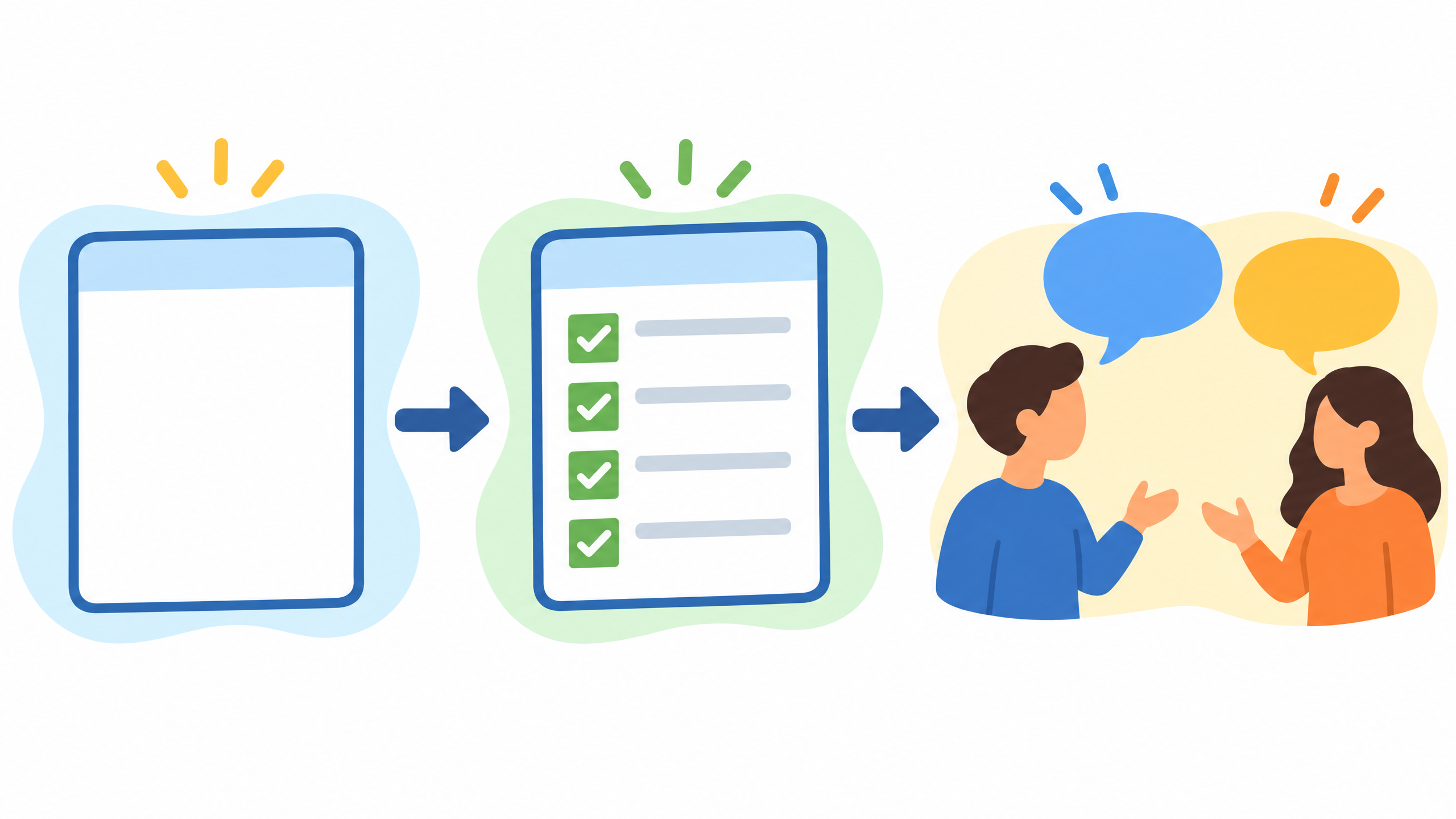
Try this now: practise one real example
Copy this prompt and fill in the brackets with information you are comfortable sharing:
Help me practise for a [role] interview. Use only this public job description or summary: [paste a non-confidential summary]. Here is one real example from my experience: [what happened, what I did, and what I learned]. Ask me one question at a time. After I answer, give feedback on clarity and relevance, point out anything I should explain more clearly, and do not invent facts or achievements. If information is missing, ask me instead of filling it in.
Answer the first question without reading a prepared script. Then review the feedback and decide which points actually improve your answer. Try again in your own words, keeping the facts and your voice intact.
Make answers clear without making them false
A strong practice answer is not necessarily the longest one. Focus on what the question asks, give enough context to understand the example and explain your own action. If the answer is becoming a list of unrelated details, ask the assistant to help you organise it, then check that it has not changed the meaning.
Do not claim a skill you do not have, a project you did not work on or a result you cannot support. If you are still learning a skill, say so and describe how you are practising it. If you made a mistake in a project, you can prepare an honest account of what you learned instead of asking AI to hide it.
The tool may produce formal phrases that sound unlike you. Replace them with words you would naturally use in a conversation. You can read how to write AI prompts for a simple framework for giving an assistant clear tasks, relevant context and limits.
A final checklist before the interview
- Can you explain each example in your own words without reading a script?
- Are the details and outcomes accurate, with no invented numbers or claims?
- Can you explain what you personally did and what others contributed?
- Have you prepared a few questions based on the role, not generic guesses?
- Have you checked employer and interview details through the messages or official sources you received?
- Have you removed confidential information from any practice material you shared with an AI tool?
Use AI as a rehearsal partner, not as a substitute for your judgement. Your answers should reflect your actual experience, and you should be comfortable explaining every detail if the interviewer asks a follow-up.
For guided practice with Claude, DIT's Master Claude workshop costs ₹99 + GST and runs live on Zoom on Mondays from 7 to 10 pm IST. It is a specialist workshop in using Claude, not a job placement service; use the practice plan above to prepare your own examples.
Frequently asked questions
Can AI predict the questions in my interview?
No tool can know exactly what an interviewer will ask from a job description alone. AI can help you make practice questions based on the information you provide, but prepare to discuss your real experience in your own words.
Should I memorise AI-written interview answers?
No, use the answer as a practice outline and rewrite it in your natural voice. Check every fact and make sure you can explain your example and contribution honestly.
Is it safe to paste my CV into an AI tool?
It depends on the tool's current privacy settings and terms, so check those before sharing personal information. A safer starting point is a short, edited summary with identifying and confidential details removed.
Keep learning with a free class
Join the free AI 101 class to practise clear prompts with ChatGPT, Claude and Gemini, with no coding needed. Bring a real task and learn how to refine an AI answer and check it before you use it.